 |
|


|
|
Carbendazim (CBD) Rapid Test Card pesticide residue rapid detection of testing Carbendazim in vegetables and fruits qualitatively
Product Details:
Payment & Shipping Terms:
|

Detailed Product Description
| Packing: | 20tests/kit | Shelf Life: | 12 Months When Properly Stored |
|---|---|---|---|
| Sample Performance: | Vegetables And Fruits | Detection Limit: | 0.02~10mg/kg(ppm) |
Carbendazim (CBD) Rapid Test Card
Catalog No.: GN03AE2
1. Brief
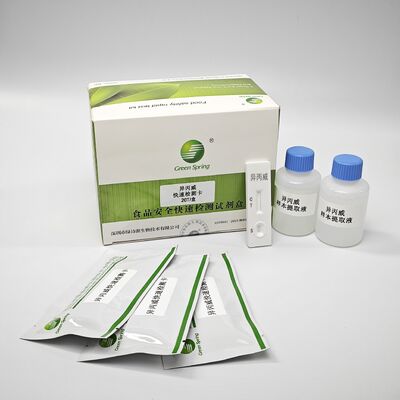
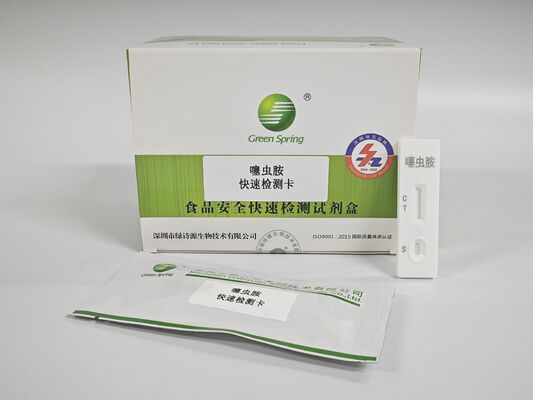
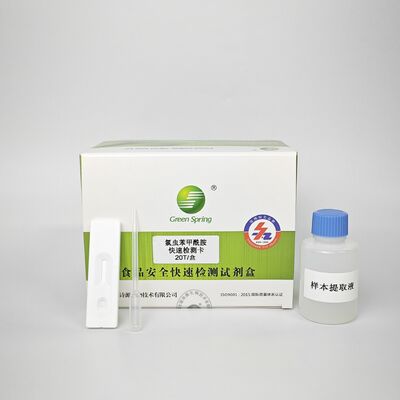
This product is used for testing Carbendazim (CBD) in vegetables and fruits qualitatively. The whole test only needs 10 min, easy to operate with high sensitivity. It is suitable for rapid on-site and laboratory testing.
2. Detection limit: 0.02~10mg/kg(ppm)
3. Application: vegetables and fruits
4. Date of manufacture and batch number: See bag and outer box for details.
5. Principle
The Carbendazim rapid test card applies the principle of competitive inhibition immunochromatography. During the micro-well incubation and chromatography process, Carbendazim in the sample binds to the colloidal gold-labeled specific Carbendazim monoclonal antibody, inhibiting the binding of the antibody to the Carbendazim-BSA conjugate on the NC membrane testing line, thereby causing a change in the depth of the testing line color.
6. Components
| 1 | Carbendazim rapid test card | 20 pieces |
| 2 | Manual | 1 piece |
| 3 | Extraction buffer | 4 bottles |
| 4 | Disposable dropper | 20 pieces |
7. Auxiliary equipment
Electronic balance (with an accuracy of 0.1g or above), scissors, single-channel pipettes (100-1000μl, 20-200μl), oscillator
8. Sample Pretreatment
Weigh 2g±0.1g of the vegetable/fruit sample into a 50ml centrifuge tube (cut leafy vegetables into pieces about 1cm square, and take cross-sectional samples or their skins for tubers), add 3ml of the Extraction buffer, shake by hand to mix well (vigorous shaking is prohibited) for 2 minutes, and let it stand to obtain the sample solution.
9. Operation procedures
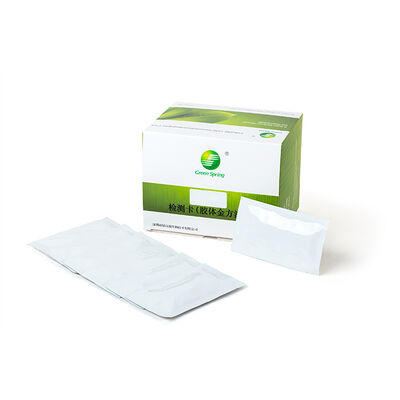
1) Take out the test card from the aluminum foil bag and use them within one hour.
2). Before testing different types of samples, users need to dilute the sample solution. For details, please refer to the following dilution list.
3). Use a dropper to draw 4 drops (about 100µl) of the diluted solution into the sample loading hole (S) of the test card. Start timing after adding the sample.
4). Let it stand for reaction. After 5 minutes, determine the result based on the schematic diagram. Other interpretation times are invalid.
Dilution list
| Sample name |
National standard GB2763-2026 |
Dilution ratio |
| Vegetables: Garden peas(edible pod) | 0.02 mg/kg | Directly testing sample solution |
| Vegetables:Gherkin | 0.05 mg/kg | Sample solution 100μl+ extraction buffer 100μl (volume ratio 1:1) |
| Vegetables: Soybeans (for vegetables), Carrots, Lotus seeds (fresh), Lotus root | 0.2 mg/kg | Sample solution 20μl+ extraction buffer 180μl (volume ratio 1:9) |
| Vegetables: Bitter melon | 0.3 mg/kg | Sample solution 20μl+ extraction buffer 280μl (volume ratio 1:14) |
|
Vegetables: Brussels sprouts, Zucchini, Snap beans, Asparagus lettuce,Root mustard Fruits: Lemon, Pomelo, Plum, Cherry, Jujube (fresh), Blackberry, Currant, Strawberry, Olive, Fig, Lychee, Pineapple
|
0.5 mg/kg | Sample solution 20μl+ extraction buffer 480μl (volume ratio 1:24) |
|
Vegetables:Leaf mustard Fruits: Berries and other small fruits (excluding blackberry, Currant, grape, kiwi, strawberry) |
1 mg/kg | Sample solution 20μl+ extraction buffer 980μl (volume ratio 1:49) |
|
Vegetables: Chili pepper, Cucumber Fruits: Peach, Nectarine, Apricot, Banana, Watermelon, Mango |
2 mg/kg |
Sample solution 20μl+ extraction buffer 1980μl (volume ratio 1:99) |
|
Vegetables: Tomato, Eggplant Fruits:Pear, Hawthorn, Loquat, Quince, Grape |
3 mg/kg | Sample solution 20μl+ extraction buffer 2980μl (volume ratio 1:149) |
|
Vegetables: Chinese chives, Head lettuce Fruits: Citrus, Tangerine, Orange, Apple, Kiwi |
5 mg/kg | Sample solution 20μl+ extraction buffer 4980μl (volume ratio 1:249) |
| Fruits: Longan | 10 mg/kg | Sample solution 20μl+ extraction buffer 9980μl (volume ratio 1:499) |
10. Test Result Interpretation
1) Negative: the color of T line is darker than C line or T line has same color with C line; it means there is no Carbendazim residue or the residue is lower than detection limit.
2) Positive: T line is obviously lighter than C line or T line is invisible; it means the Carbendazim residue is equal to or higher than detection limit.
3) Invalid test: If C line does not show which means the test cassette is out of efficacy, out of date or improper operation. Please run the test again using another package. If the invalid tests keep happening, please contact the local distributor.

11. Precautions
1). The test card is for single use at room temperature. Never use expired test cards.
2). Disposable droppers must not be reused to avoid cross-contamination.
3). Try not to touch the white membrane surface in the center of the test card during use. Avoid direct sunlight and direct fan blowing.
4). Tap water, distilled water or deionized water cannot be used as negative controls.
5). If a positive result is detected, it is recommended to retest with this card once.
6). If you encounter any problems during the test, please contact our company.
12. Specificity
This product has no cross-reaction with other types of pesticides such as Carbofuran and isoprocarb.
13. Storage and expiry date
Storage: Store at 2-30℃ in dark, sealed, dry place, no frozen.
Expiry date: 12 months
14. Safety Instructions
This product does not contain carcinogenic, highly toxic, flammable, explosive or strongly corrosive reagents.
Shenzhen Lvshiyuan Biotechnology Co., Ltd
D Building, National Biological Industrial Park of Marinelife, No.2 Binhai Road, Dapeng, Shenzhen, 518120 China
Tel. 86-18165709090/86-755-28438788 Fax 86-755-28938800
Email: info@lsybt.com
www.lsybt.com
Contact Details
Other Products
-
Methomyl Rapid Test Card pesticide residue rapid detection of testing Methomyl in vegetables and fruits qualitatively
-
Imidacloprid Rapid Test Card pesticide residue rapid detection of testing Imidacloprid in vegetables and fruits qualitatively
-
Fipronil Rapid Test Card pesticide residue rapid detection of testing Fipronil in vegetables and fruits qualitatively
-
Glyphosate Rapid Test Card pesticide residue rapid detection of Glyphosate residues in tea leaf
-
Organophosphate Rapid Test Card pesticide residue rapid detection for vegetables and fruits,suitable for on-site and laboratory rapid testing.