 |
|
|
|
Paraquat (PRQ) Rapid Test Card pesticide residue rapid test kit for vegetables and fruits
Product Details:
Payment & Shipping Terms:
|

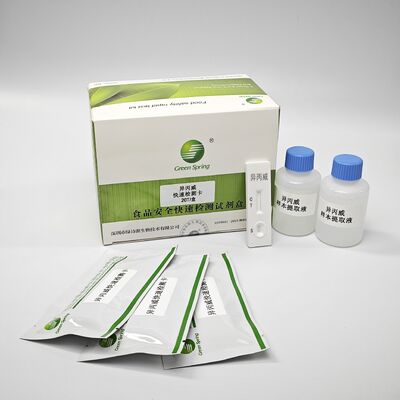
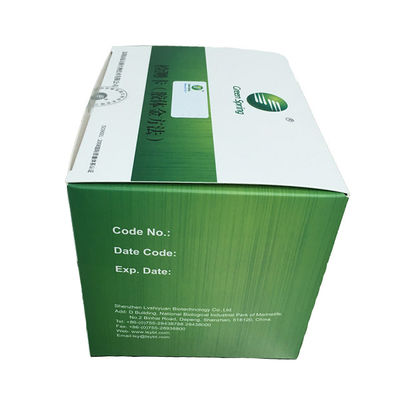
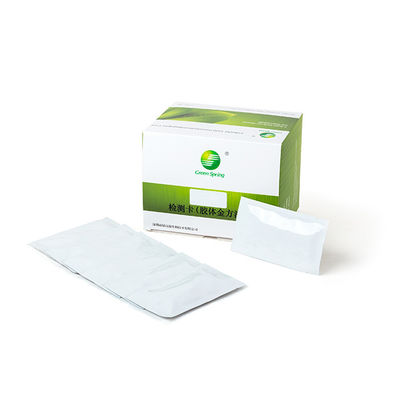
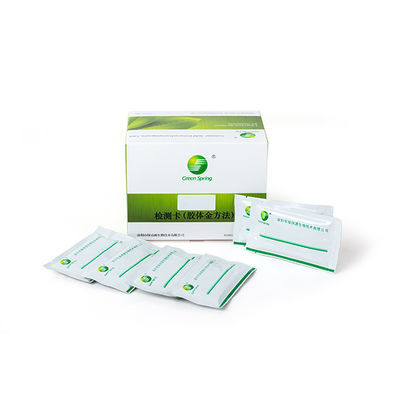
Detailed Product Description
| Packing: | 20tests/kit | Shelf Life: | 12 Months When Properly Stored |
|---|---|---|---|
| Sample Performance: | Vegetables And Fruits | Detection Limit: | 0.01~0.2mg/kg (ppm) |
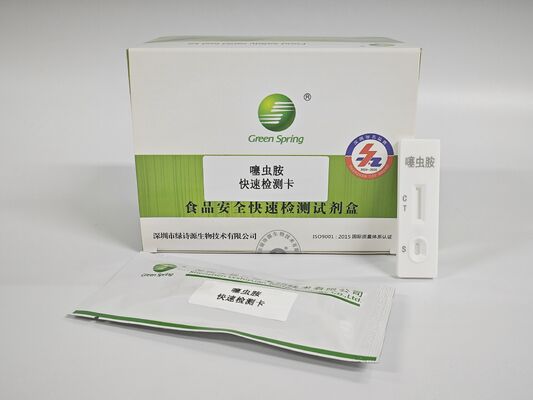
Paraquat (PRQ) Rapid Test Card
Instructions for Use
Catalog No.: GN13AE2
[Product Overview]
This product is designed for rapid detection of paraquat residues in vegetables and fruits, featuring simple operation and high sensitivity. The entire testing process requires only 10 minutes, making it suitable for both on-site and laboratory applications.
[Detection limit]
0.01~0.2mg/kg(ppm)
[Application]
Suitable for vegetables and fruits.
[Lot Number and Production Date]
For details, refer to the packaging bag and outer box.
[Principle]
The paraquat rapid test kit employs the principle of competitive inhibition immunochromatography. During chromatography, paraquat in the sample binds to colloidal gold-labeled specific monoclonal antibodies against paraquat, thereby inhibiting the binding of the antibody to the paraquat-BSA conjugate on the NC membrane testing line and resulting in a change in the intensity of the testing line color.
[Product formation]
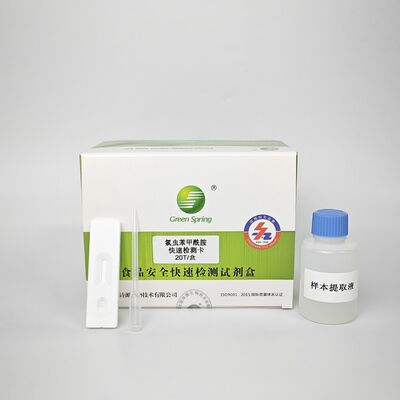
| 1 | Paraquat Rapid Test Card | 20 pieces per box |
| 2 | Instructions | 1 copy |
| 3 | Sample extraction solution | 2 bottles |
| 4 | Disposable plastic dropper | 20 units |
[Accessory equipment]
Electronic balance (precision ≥ 0.1 g), scissors, single-port pipette (100–1000μl, 20–200μl), oscillator.
[Sample Pre-treatment]
Weigh 2 g ± 0.1 g of the vegetable/fruit sample into a 50 ml centrifuge tube (leafy vegetables are cut into approximately 1 cm square fragments; tubers may be sampled as cross-sections or epidermal samples). Add 3 ml of sample extraction solution, shake gently for 2 minutes (avoid vigorous agitation), and allow the mixture to stand to obtain the final sample solution.
[Testing Steps]
1. Remove the test card from the aluminum foil bag and use it within one hour.
2. For different types of samples, users must dilute the sample solution prior to testing; refer to the following dilution list for details.
3. Place the test card flat and vertically add 4 drops of the test solution (or 100 µL using a micropipette) into the sample well with a disposable plastic dropper.
4. Allow the reaction to proceed undisturbed; after 5 minutes, determine the result according to the schematic diagram. Readings obtained at other time points are invalid.
Dilution List:
| Sample Types | GB 2763–2026 Limited Standard | Dilution Method |
| Fruits: drupe fruits (excluding apples), nut fruits, berries and other small fruits; tropical and subtropical fruits with inedible skins (excluding bananas). | 0.01mg/kg | The sample solution is used directly for testing. |
| Fruits: Citrus fruits (excluding tangerines, oranges, and mandarins), bananas, and other melon-like fruits | 0.02mg/kg | Sample solution 100μL + Sample extraction solution 100μL (volume ratio 1:1) |
|
Vegetables: bulb vegetables, Brassicaceae vegetables, leafy vegetables, solanaceous vegetables, gourd vegetables, leguminous vegetables, stem vegetables, root and tuber vegetables, aquatic vegetables, sprout vegetables, and other types of vegetables. Fruit: Apple |
0.05mg/kg | Sample solution 50μL + Sample extraction solution 200μL (volume ratio 1:4) |
| Fruit: Olive | 0.1mg/kg | Sample solution: 20μL + Sample extraction solution: 180μL (volume ratio 1:9) |
| Fruits: citrus, orange | 0.2mg/kg | Sample solution: 20μL +Sample extraction solution: 380μL (volume ratio 1:19) |
[Result Interpretation]
1.Negative: The T-ray color intensity is stronger than that of the C-ray or shows no significant difference from it, indicating that the sample contains no paraquat or its concentration is below the detection limit.
2.Positive: T-ray staining is significantly weaker than C-ray staining, or no staining occurs on T-ray, indicating the presence of paraquat in the sample or a concentration exceeding the detection limit.
3.Invalid: If the C-line does not show color, regardless of whether the T-line shows color, this indicates that the test card is invalid, expired, or improperly used; a new test should be performed. If this occurs repeatedly, please contact our company.
[Result Interpretation Diagram]

[Notice]
1. The test card is for single-use at room temperature; do not use expired test cards.
2. Single-use plastic droppers should not be reused to prevent cross-contamination.
3. During use, avoid touching the white film surface in the center of the test card; protect it from direct sunlight and direct airflow of fans.
4. Tap water, distilled water, or deionized water cannot be used as negative controls.
5. If a positive result is obtained, it is recommended to retest using this card.
6. If you encounter any issues during the trial, please contact our company.
[Specificity]
This product exhibits no cross-reactivity with other pesticides such as carbendazim, carbendazim-methyl, or paraquat.
[Storage]
Store sealed, dry, and protected from light at 2–30°C; do not freeze. Shelf life: 12 months.
[Security declaration]
This product does not contain carcinogenic, highly toxic, flammable, explosive, or strongly corrosive reagents.
Shenzhen Lvshiyuan Biotechnology Co., LtdD Building, National Biological Industrial Park of Marinelife, No.2 Binhai Road, Dapeng, Shenzhen, 518120 China
Tel. 86-755-28438788 Fax 86-755-28938800
Email: info@lsybt.com
www.lsybt.com
Tag:
rapid response btnx
Contact Details
Other Products
-
GN15A\G3 Avermectin&Eprinomectin Rapid Test Strip for dairy 96tests per box detection limit 20ppb
-
Rhodamine B Rapid Test Kit for testing Rhodamine B in Chili products (chili powder, chili oil, chili sauce, etc.) qualitatively
-
Cyromazine Rapid Test Strip detection limit 5ppb to detect Cyromazine residue in milk
-
Clopidol Rapid Test Strip detection limit 1ppb to detect Clopidol residue in milk
-
Green Spring Beta-Lactams rapid test card for meat cassette format 20T package antibiotic residue detector for meat
-
Chlorpyrifos Rapid Test Card for testing Chlorpyrifos in vegetables and fruits qualitatively