 |
|
|
|
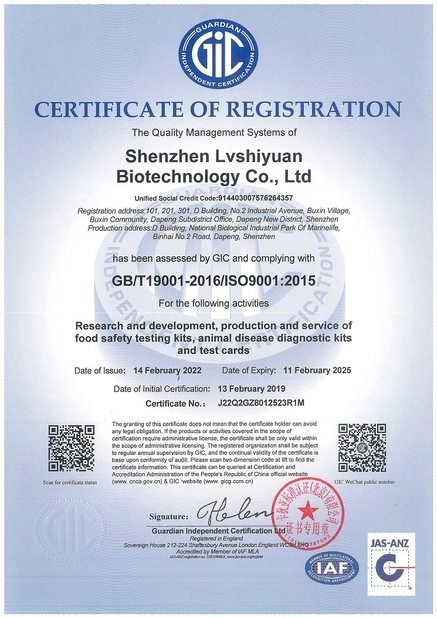
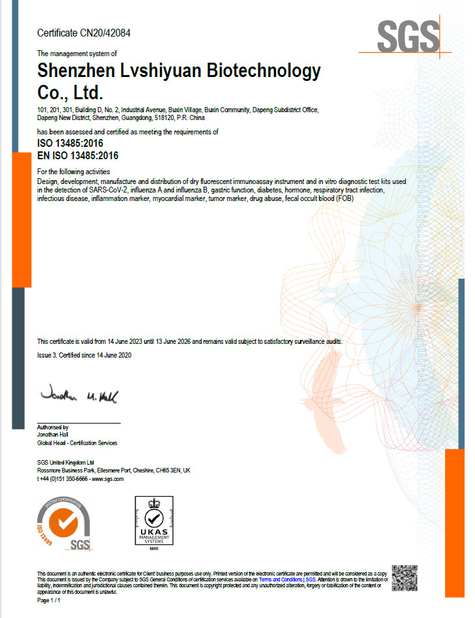
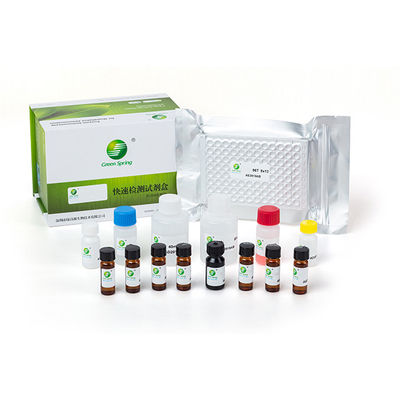
Green Spring Cephalosporin ELISA Test Kit based on the competitive enzyme immunoassay for the detection of Cephalosporin in food sample
Product Details:
Payment & Shipping Terms:
|

Detailed Product Description
| Specification: | 96 Wells/kit | Sensitivity: | 1ppb |
|---|---|---|---|
| Incubator Temperature: | 25℃ | Incubator Time: | 30min—30min—15min |
| Shelf Life: | 12 Months When Properly Stored | Sample Performance: | Fish, Shrimp, Pork, Duck, Chicken, Lamb, Beef, Milk |
| Recovery Rate: | 95±30% |
Cephalosporin ELISA Test Kit
Catalog No. LSY-10077
1. Principle
This test kit is based on the competitive enzyme immunoassay for the detection of Cephalosporin in the sample. The coupling antigens are pre-coated on the micro-well stripes. The Cephalosporin in the sample and the coupling antigens pre-coated on the micro-well stripes compete for the anti-Cephalosporin antibody. After the addition of the enzyme conjugate, the TMB substrate is added for coloration. The optical density (OD) value of the sample has a negative correlation with the Cephalosporin in it. This value is compared to the standard curve and the Cephalosporin concentration is subsequently obtained.
2. Technical specifications
Sensitivity: 1 ppb
Standard curve range: 1ppb-27ppb;
Intra-plate variation coefficient:<5%;
Variation coefficient between plates:<15%;
The best value of B0 absorbance:>0.8;
Incubation Temperature: 25℃
Incubation Time: 30min—30min—15min
Detection limit:
Tissue(method 1) about 30ppb
Tissue(method 2) about 4ppb
Milk about 10ppb
Note: ppb=ng/mL or ng/g
Cross-reaction rate
Ceftiofur 100%
DesfuroylCeftiofur 100%
Cefquinome 103%
Ceftiaxone 157%
Cefotaxime 60%
Recovery rate:
90%±30%
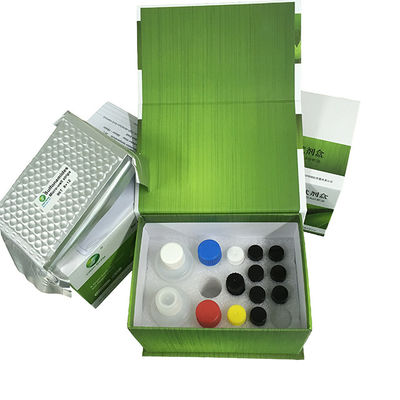
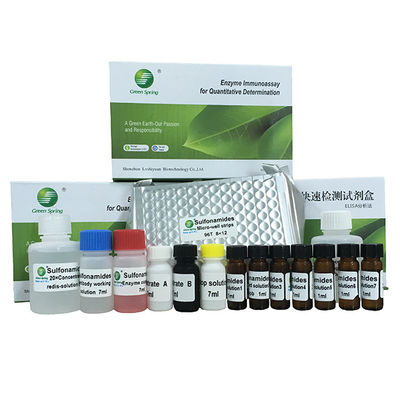
3. Components
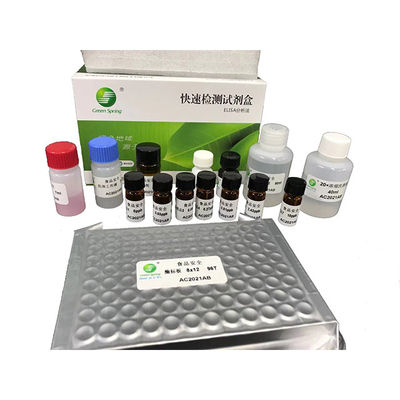
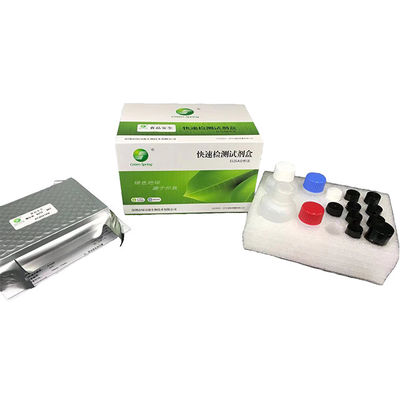
- Micro-well strips: 12 strips with 8 removable wells each
- Standard solution (1ml/bottle): 0ppb, 1ppb, 3ppb, 9ppb, 27ppb, 81ppb.
- Antibody working solution (7 mL)
- Enzyme labeled II antibody working solution (12 mL)
- 20× concentrated washing buffer (30 mL)
- 10× concentrated redissolving solution (10 mL)
- Substrate A (7 mL)
- Substrate B (7 mL)
- Stop solution (7 mL)
4. Materials required but not provided
- Equipment: microplate reader (450nm, 630nm), rotary evaporator/nitrogen-drying device, homogenizer, oscillator, centrifuge (4000g and above), balance (a sensibility reciprocal of 0.01 g), measuring pipets, incubator (adjustable 25℃),timer
- Micropipette: single-channel 20~200 µL and 100~1000 µL, and eight-channel 30~300 µL;
- Reagents: Acetonitrile, Methanol, N-hexane, Deionized water, 12M concentrated hydrochloric acid.
5. Sample pre-treatment
Instructions
The following points must be dealt with before the pre-treatment of any kind of sample:
1) Only the disposable tips can be used for the experiments and the tips must be changed when used for absorbing different reagents;
2) Before the experiment, each experimental equipment must be clean and should be re-cleaned if necessary, in order to avoid the contamination that interferes with the experimental results.
Solution preparation before sample pre-treatment:
- Sample redissolving solution: 1 part of 10× concentrated redissolving solution + 9 parts of deionized water, mix it evenly for use.
- 0.05M hydrochloric acid solution: Take 2.1ml of 12M concentrated hydrochloric acid, add 497.9ml of deionized water to dissolve and mix well.
- Extract solution: Measure 80ml of acetonitrile and add it to 20ml of 0.05M hydrochloric acid solution, mix well.
- Washing buffer: 1 part of 20× concentrated washing buffer + 19 parts of deionized water;
5.1 Tissue(method 1)
1) Take 1.0±0.05g homogenized tissue sample into a 10ml polystyrene centrifuge tube, add 1ml Methanol, vortex for 1min,centrifuge at above 3000g at room temperature (20 - 25 ℃) for 5min;
2) Take 50μL up-layer clear liquid into a 2ml polystyrene centrifuge tube, add 450μL of the Sample redissolving solution, then add 0.5mL N-hexane, vortex for 1min, centrifuge at above 3000g at room temperature (20 - 25 ℃) for 5min;
3) Remove the upper organic phase and take 50μL of the down-layer phase for analysis (plate analysis should be performed immediately after sample processing).
Fold of dilution of the sample: 20
5.2 Tissue(method 2)
1) Take 2.0±0.05g homogenized tissue sample into a 50ml polystyrene centrifuge tube, add 8ml Extract solution, strongly shake for 5min;
2) Centrifuge at above 4000g at room temperature (20 - 25 ℃) for 5min;
3) Transfer 1ml of the upper organic phase to a 10ml clean and dry glass test tube, and blow dry under nitrogen flow in a 50-60 ℃ water bath;
4)Add 1ml of n-hexane, vortex for 30S, then add 1ml of Sample redissolving solution, vortex for 30S, mix well, centrifuge at above 3000g at room temperature (20 - 25 ℃) for 5min;
Take 50μL up-layer clear liquid into a 2ml polystyrene centrifuge tube, add 450μL of the Sample redissolving solution, then add 0.5mL N-hexane, vortex for 1min, centrifuge at above 3000g at room temperature (20 - 25 ℃) for 5min;
5) Remove the upper organic phase and take 50μL of the down-layer phase for analysis (plate analysis should be performed immediately after sample processing).
Fold of dilution of the sample: 4
5.3 Milk
1) Transfer 100μL of fresh milk into a 2mL plastic centrifuge tube (be careful not to take the cream on top of the sample), add 900μL of Sample redissolving solution, vortex for 30S to mix well;
2) Take 50μL for analysis.
Fold of dilution of the sample: 10
6. ELISA procedures
Instructions
1. Bring all reagents and micro-well strips to the room temperature (20-25 ℃).
2. Return all reagents to 2-8 ℃ immediately after use.
3 .The reproducibility of the ELISA analysis, to a large degree, depends on the consistency of plate washing. The correct operation of plate washing is the key point in the procedures of ELISA.
4. For the incubation at constant temperatures, all the samples and reagents must avoid light exposure, and each microplate should be sealed by the cover membrane.
Operation procedures
- Take out all the necessary reagents from the kit and place at the room temperature (20 to 25 ℃) for at least 30 minutes. Note that each liquid reagent must be shaken to mix evenly before use.
- Take the required micro-well strips and plate frames. Re-sealed the unused microplate, stored at 2-8 ℃, not frozen.
- Numbering: number the micro-wells according to samples and standard solution; each sample and standard solution should be performed in duplicate; record their positions.
- Add 50µL of the sample or standard solution to separate duplicate wells; Then add Antibody working solution, 50 µL each well. Mix gently by shaking the plate manually, seal the microplate with the cover membrane, and incubate at 25 ℃ at dark for 30 minutes.
- Pour liquid out of microwell, add 250 µL/well of washing buffer for 15-30 seconds, repeat three to four times, then flap to dry (if there are the bubbles after flapping, cut them with the clean tips).
- Add Enzyme labeled II antibody working solution, 100 µL each well. Mix gently by shaking the plate manually, seal the microplate with the cover membrane, and incubate at 25 ℃ at dark for 30 minutes.
- Pour liquid out of microwell, add 250 µL/well of washing buffer for 15-30 seconds, repeat three to four times, then flap to dry (if there are the bubbles after flapping, cut them with the clean tips).
- Coloration: add 100 µL mixture of the substrate A and substrate B into each well (Note: mix Substrate A and Substrate B at 1:1, the mixture should be used in 10min, never use metal container or metal to stir the solution, otherwise the substrate may be invalid.). Mix gently by shaking the plate manually, and incubate at 25 ℃ for 15 minutes at dark for coloration.
- Determination: add 50 µL of the stop solution into each well (The substrate color from blue to yellow, it means the stop succeeds). Mix gently by shaking the plate manually. Set the wavelength of the microplate reader at 450 nm to determine the OD value (Recommend to read the OD value at the dual-wavelength 450/630 nm within 5 minutes).
7. Result judgment
Quantitative determination
The mean values of the absorbance values is equivalent to the percentage of the average OD value (B) of the sample and the standard solution divided by the OD value (B0) of the first standard solution (0 standard) and subsequently multiplied by 100%, that is,
| Percentage of absorbance value = | B | ×100% |
| B0 |
B—the average (double wells) OD value of the sample or the standard solution
B0—the average OD value of the 0 ng/mL standard solution
Draw the standard curve with the absorption percentages of the standard solutions and the semilogarithm values of the Cephalosporin standard solutions (ng/mL) as Y- and X-axis, respectively. Read the corresponding concentration of the sample from the standard curve by incorporating its absorption percentage into the standard curve. The resulting value is subsequently multiplied by the corresponding dilution fold, thus finally obtaining Cephalosporin concentration in the sample.
8. Precautions
- Please read the instructions carefully before using the ELISA kit.
- Before using the ELISA kit, each component inside the kit needs to be placed on the experimental bench and warmed back to room temperature (25 ± 2 ℃) (note: about 1 hour).
- The reagent needs to be shaken well before use, and bubbles should be avoided during mixing.
- The pipette tips is a disposable item. To prevent cross contamination of reagents, do not repeat use the tips.
- Do not use expired reagent kits, and reagents from different batch number kits should not be mixed.
- Please analyze the sample immediately after processing, otherwise it may affect the test results.
- Both substrate A and substrate B are colorless and transparent liquids. If they have turned blue before use or immediately after mixing, it indicates that the reagent has been contaminated or deteriorated.
- The sampling process must be rapid while ensuring accuracy to avoid the impact of reaction time differences on the detection results.
- The stop solution contains sulfuric acid. If it accidentally splashes onto the skin or clothing, please rinse immediately with plenty of water. If it accidentally enters the eyes, please go to the hospital for examination after thorough cleaning.
9. Storage and expiry date
Storage: store at 2-8 ℃, not frozen.
Expiry date: 12 months; date of production is on the box.
Shenzhen Lvshiyuan Biotechnology Co., Ltd
D Building, National Biological Industrial Park of Marinelife, No.2 Binhai Road, Dapeng, Shenzhen, 518120 China
Tel. 86-755-28438788
Fax 86-755-28938800
Email: info@lsybt.com
www.lsybt.com

Tag:
elisa kit
Contact Details
Other Products
-
LSY-10049 Chlortetracyline ELISA test kit Antibiotic detection
-
LSY-10050 Erythromycin ELISA test kit for milk, honey, tissue
-
LSY-10046 MQCA Olaquindox metabolites ELISA Test Kit ISO certificated
-
LSY-10047 Nitroimidazoles ELISA Test Kit for tissue, honey, milk and egg
-
LSY-10047 Nitromidazoly ELISA Test Kit antibiotic residue Food safety
-
LSY-10047 Nitromidazoly ELISA Test Kit Food testing ISO certificated