 |
|
|
|
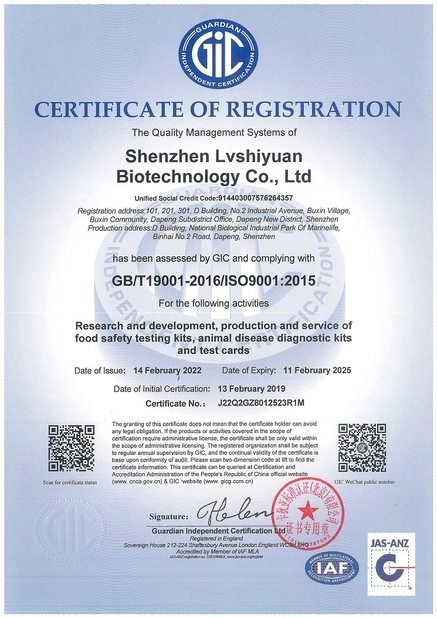
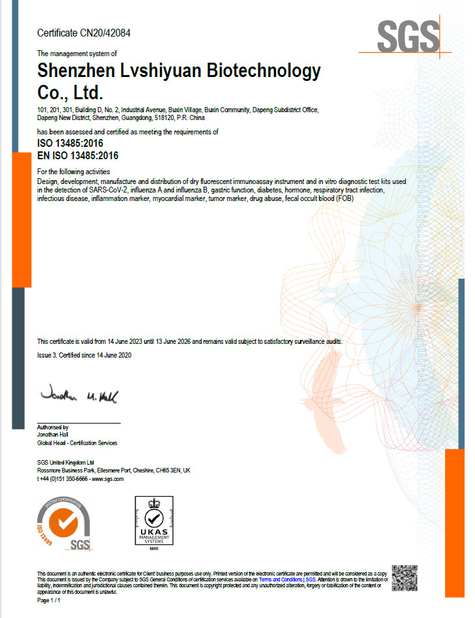
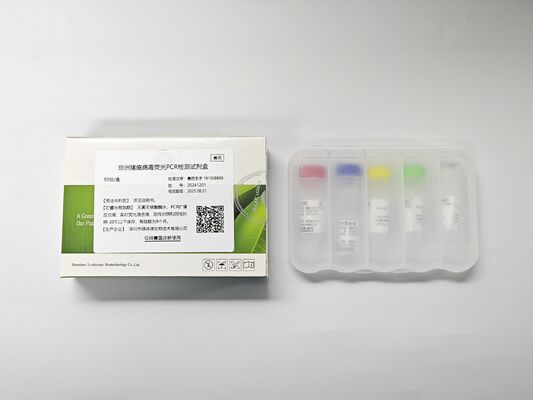
PA30A\01 A kit for the diagnosis of cattle diseases using PCR for foot-and-mouth disease 50T/kit Foot-and-Mouth Disease Virus-Universal (FMDV-U) nucleic acid test kit (Fluorescent RT-PCR)
Product Details:
Payment & Shipping Terms:
|

Detailed Product Description
| CV: | CV<3% | Specificity: | 100% |
|---|---|---|---|
| Shelf Life: | 12 Months | Sample Type: | Serum, Blister Skin, Blister Fluid And Other Sample |
| Packing: | 50T/kit |
 Foot-and-Mouth Disease Virus-Universal (FMDV-U) nucleic acid test kit
(Fluorescent RT-PCR)
| Catalog No. | Specifications | Storage | Transport | Version number |
| PA30A1 | 50 T | -20℃ | low temperature | V1 |
[Product Overview]
This product is a one-step qRT-PCR nucleic acid test kit designed for the auxiliary detection of FMDV nucleic acid in samples. Specific primers and a specific fluorescent probe targeting the conserved region of the FMDV 3D gene have been developed; the probe is labeled with the FAM fluorescent dye. When combined with the qRT-PCR reaction mix, this kit enables rapid detection of FMDV-U nucleic acid using a fluorescent quantitative PCR instrument.
The kit includes a positive control and a negative control. The positive control consists of a plasmid containing the amplification fragment, used to assess the validity of the assay; the negative control is used to detect the presence of contamination in the reaction system.
[Product Composition]
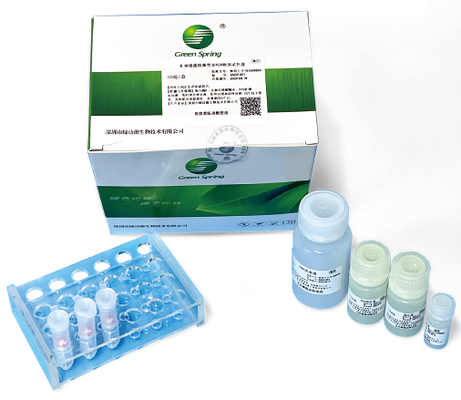
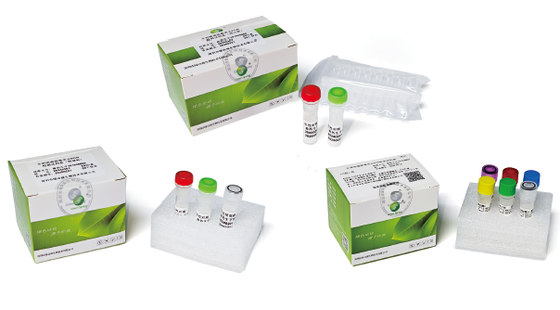
| Code | Component | PA30A1 |
| 1 | One-step qRT-PCR enzyme mix | 80 μL |
| 2 | FMDV-U qRT-PCR amplification reaction mix | 1250 μL |
| 3 | Positive control | 100 μL |
| 4 | Negative control | 100 μL |
[Storage Conditions]
Store at-20 °C, protected from light; shelf life: 12 months.
[Applicable Instruments]
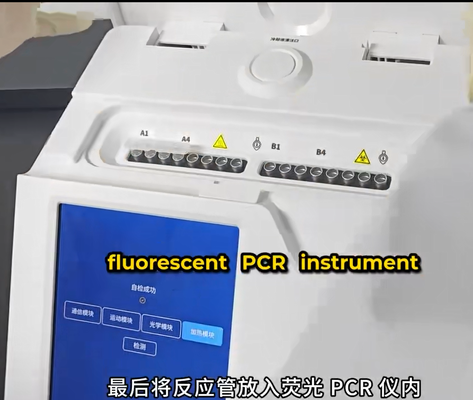
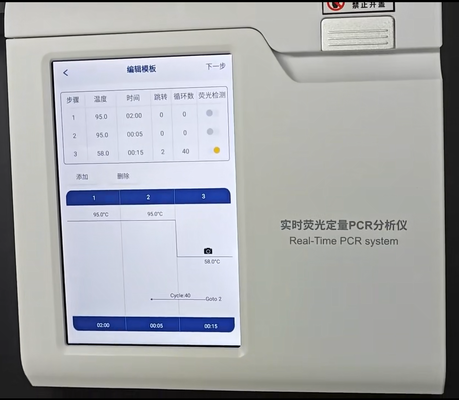
Real-time fluorescent PCR instruments, such as the ABI 7500, Bio-Rad CFX96, and SLAN®-96P.
[Sample Requirements]
- Customers are required to provide their own reagents: normal saline.
- Collected serum, blister skin, blister fluid and other sample should be stored and transported at 2–8 °C and promptly submitted for laboratory testing. Alternatively, the samples may be preserved in viral transport medium and then sent to the laboratory for analysis.
Note: Samples submitted for testing must be fresh; repeated freeze-thaw cycles are strictly prohibited.
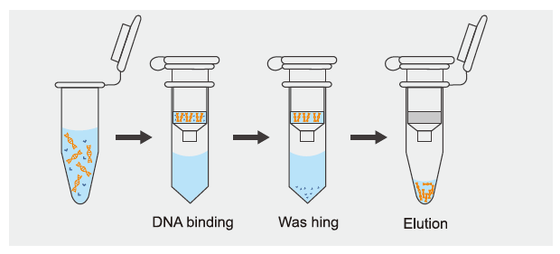
- It is recommended to use a commercial viral nucleic acid extraction kit for RNA extraction and purification; the extracted RNA can then be directly used for detection. If samples are not analyzed immediately after extraction, they may be stored at-80 °C for later use; however, repeated freeze-thaw cycles should be avoided.
[Operating steps]
- Sample Processing – Viral RNA Extraction (This kit does not include sample processing reagents)
It is recommended to perform sample pre-treatment in accordance with standards such as "GB/T 18935-2018 Diagnostic Techniques for Foot-and-Mouth Disease virus" and "NY/T 541-2016 Technical Specifications for Sampling, Preservation, and Transportation of Veterinary Diagnostic Samples," and to utilize commercial nucleic acid extraction kits to extract nucleic acids from the samples.
1). Tissue sample processing: Take approximately 1 g of tissue sample, cut it into small pieces using surgical scissors, and mix thoroughly; then take 0.05 g of the tissue sample and place it in a mortar, add 1.5 mL of normal saline, and continue grinding; once homogenized, transfer the mixture to a 1.5 mL sterile centrifuge tube, centrifuge at 8,000 g for 2 min, and collect 100 µL of the supernatant in another 1.5 mL sterile centrifuge tube.
2). Serum sample processing: Transfer 100 µL of serum sample into a 1.5 mL sterile centrifuge tube.
3). Cell culture medium sample processing: Transfer 100 µL of cell culture medium directly into a 1.5 mL sterile centrifuge tube.
4). Viral RNA was extracted using a commercial RNA extraction kit.
[Additional notes]
- The target sequence detected by this assay kit is a conserved region of FMDV 3D. However, if the virus undergoes a genetic mutation at this target sequence, false-negative results may occur.
- Test results depend on the collection, storage, and transportation conditions of the samples; errors in any of these stages can lead to false-negative results; conversely, cross-contamination during sample handling may result in false-positive results.
- This product is intended for research research use only. Before use, please carefully read this kit instruction manual and strictly follow the operating procedures.
- Personnel performing experiments who have undergone professional training must wear protective equipment and conduct their operations within a laboratory equipped with appropriate safety safeguards.
- The reagent kit should be stored away from light to prevent degradation of the fluorescent compounds. All consumables used, including centrifuge tubes and tips, must be autoclaved and free of DNase and RNase.
- The test samples involved in this kit shall be regarded as containing infectious substances; all operations and handling procedures must comply with the relevant requirements of the "General Biosafety Guidelines for Microbial and Biomedical Laboratories" issued by the Ministry of Health and the "Regulations on the Management of Medical Waste."
Contact Details
Other Products
-
PA54A\01 A kit for the diagnosis of cattle diseases using PCR for diseases such as Brucellosis 50T/kit Nucleic Acid Detection Kit for Brucella abortus (Fluorescent PCR Method)
-
PA51A\01 A kit for the diagnosis of cattle diseases using PCR for anthrax 50T/kit Nucleic Acid Detection Kit for Bacillus anthracis (Fluorescent PCR Method)
-
Peste des petits ruminants virus (PPRV) nucleic acid test kit (Fluorescent RT-PCR) PPR ONE-STEP RTPCR KIT
-
Brucella Melitensis Fluorescence PCR Kit Nucleic Acid Detection Kit for Brucella melitensis (Fluorescent PCR Method)